

July 22, 2026 | Announcements
Burlington Data Centre Proposal: What Homeowners Should Know
You may have seen headlines this week about a Burlington data centre proposed for South Service Road. As your local real estate team, we like to keep our clients and neighbours informed about development in our own backyard. Here is a quick, practical rundown of the proposal and what it could mean if you own or are buying property nearby.
What Is Being Proposed
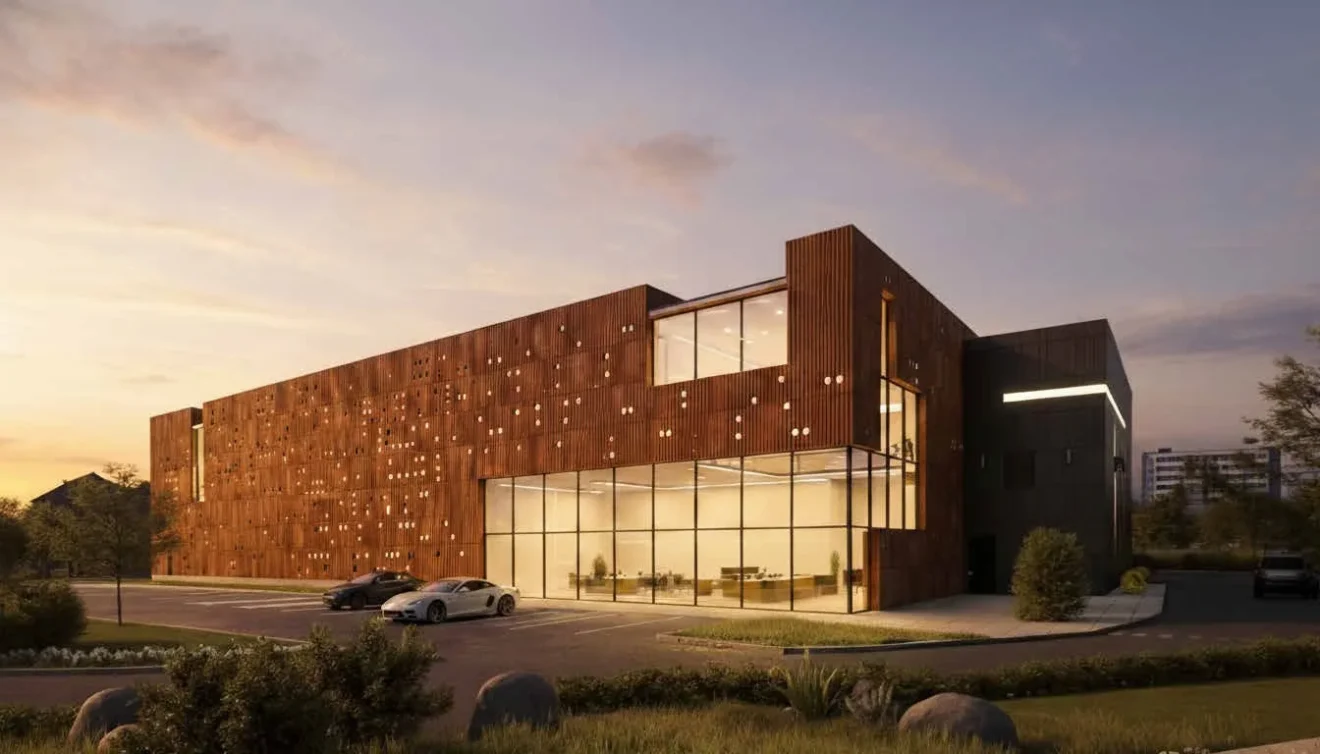
The City of Burlington has received a site plan application for a new data centre at 3110 South Service Road. This is the former home of Mother Tucker’s and Tucker’s Marketplace, near Guelph Line. A data centre houses computer servers and equipment that store and process digital information for businesses, governments and online services.
The proposal includes a two storey building of roughly 5,000 square metres, with underground and surface parking. We cover the energy and water side of the project below.
Why This Only Needs Site Plan Approval
The site sits in an employment area, where this type of use is already permitted. That means the applicant only needs site plan approval, not a zoning change. City staff will handle the review, and they will focus on things like setbacks, parking, landscaping and servicing. A rezoning would trigger a public meeting, but this application does not require one. Residents can still submit written comments to the City Clerk or request to speak at a Council meeting if they want their concerns on record.
Not All Data Centres Are Built the Same
The term “data centre” covers a wide range of facility sizes. Size drives how much electricity and water a facility needs, not just how much land it takes up.

- Edge data centres: small, local facilities, typically 50 kilowatts to 2 megawatts. Cooling needs stay modest, and many run on standard building air conditioning instead of dedicated water systems.
- Enterprise data centres: one company owns these privately, and they generally use 0.5 to 10 megawatts. Builders usually cool them with air conditioning units or a small water-based chiller loop.
- Colocation facilities: these shared buildings let multiple tenants rent space, and they range from a few megawatts up to tens of megawatts. Most rely on a mix of air-cooled and water-cooled chiller systems, since tenants often run different equipment with different cooling needs.
- Hyperscale data centres: these are the largest facilities, and they generally start above 100 megawatts, with some exceeding 650 megawatts. That output rivals a mid sized power plant. Most large hyperscale campuses worldwide still use evaporative, water-based cooling towers because they save energy, though a growing number now use closed-loop liquid cooling or dry, air-based systems to cut back on water use.
As a rough rule, water-cooled systems use less electricity but draw on the local water supply, while air-cooled systems use more electricity and little to no water. It comes down to a genuine trade-off between the two resources, and the right choice usually depends on local water availability and climate.
What This Burlington Data Centre Would Use:
The applicant states the facility would draw approximately 17 megawatts of electricity from the grid, serviced through Burlington Hydro. The design uses an air-cooled system rather than a water-cooled one. In practical terms, that means the facility will not draw on Burlington’s municipal water supply for cooling, since Halton Region does not permit that use. It does mean a steady electricity demand that planners will need to factor into local grid capacity. At 17 megawatts, this proposal sits closer to the enterprise or small colocation end of the scale, well below the hyperscale projects making headlines in places like Milton and Hamilton.
What This Means If You Own or Are Buying Nearby
Here is what actually matters for homeowners and buyers around South Service Road and Guelph Line:
- The zoning does not change. This existing employment area has always permitted data centres, warehouses and similar uses. This proposal does not rezone anything or open the door to new uses.
- This is a smaller scale project. At 17 megawatts, it does not compare in size or impact to the large hyperscale campuses proposed in other Ontario communities. Keep that context in mind alongside broader headlines about data centres.
- Ask about noise, traffic and visibility if you are buying nearby. These practical factors tend to influence buyer interest around any industrial use, not just data centres. If you are considering a purchase close to the site, ask your agent about the building’s expected setback, its landscaping buffers, and whether backup generators or cooling equipment will be visible or audible from the street.
- Watch the site plan decision, not a public hearing date. This application moves forward through staff approval rather than a Council vote, so there will not be one big public meeting to watch for. Check the City’s site plan application page periodically, or ask your agent to flag any updates, to stay current.
- Infrastructure reviews are still underway. Burlington Hydro is reviewing electricity servicing, and other technical reviews continue. Nothing has been finalized yet.
Does a Data Centre Affect Nearby Home Values
No Canadian data centre has shown a documented, widespread drop in home values based on actual sales data. Most Canadian projects, including proposals in Mississauga, Milton and Hamilton, are still working through planning approval. None have been built and operating long enough to show up in resale numbers. That said, any measurable effect would likely concentrate close to the site itself, typically within about 500 metres, where noise, traffic, visibility and cooling equipment become most noticeable. Homes farther from the site tend to see little to no impact at all.
How Analysts Actually Measure the Impact
Once a facility is built, analysts typically use a proximity analysis to measure its effect. This method groups nearby home sales into distance bands from the site, then compares prices before and after construction while controlling for home size, age and type. This evidence based approach would eventually show whether a specific facility affected values in the immediate area. It also explains why the answer varies from one community to the next, depending on distance, buffering and how the surrounding market performs already.
Given the modest scale of this Burlington data centre proposal, we do not expect it to move the needle on the broader neighbourhood’s housing market. Properties closest to the site are the ones worth watching as the application progresses.
Our Take
Development like this reminds us how quickly our region is evolving, which is why we keep an eye on planning news, not just listings. It is also worth noting that the area along South Service Road is largely commercial. The businesses most likely to feel the day-to-day effects, whether through changes in foot traffic, parking or the general feel of the strip, are the restaurants and shops operating nearby, not residential homeowners further away. Anyone with a stake in the local commercial market should watch this dynamic closely, not just homeowners.
If you have questions about buying or selling near this or any other development in Burlington, Oakville or Hamilton, please reach out to our team. We are happy to help you make sense of what is happening in our neighbourhoods and what it actually means for you.
Frequently Asked Questions
No. The City has received a site plan application, but no decisions have been made yet. It still needs to go through technical review, including input from Halton Region, Conservation Halton and Burlington Hydro.
No. The design uses air cooling, not water cooling, in line with Halton Region’s rules on municipal water use.
Yes. You can submit written correspondence to the City Clerk at clerks@burlington.ca, or request to delegate at a Council meeting, even though this application does not require a formal public hearing.
You May Also Like
- Building in South Burlington: The Ultimate Guide to Roseland Zoning Bylaws
- How Interest Rate Shifts Affect Your Property Value
- Bank of Canada Rate Decision: What the July Hold Means for Burlington, Oakville and Hamilton Buyers
Get The Newsletter
Join our mailing list to get updates from our experts about the Toronto market, the latest listings, and our industry insights.